
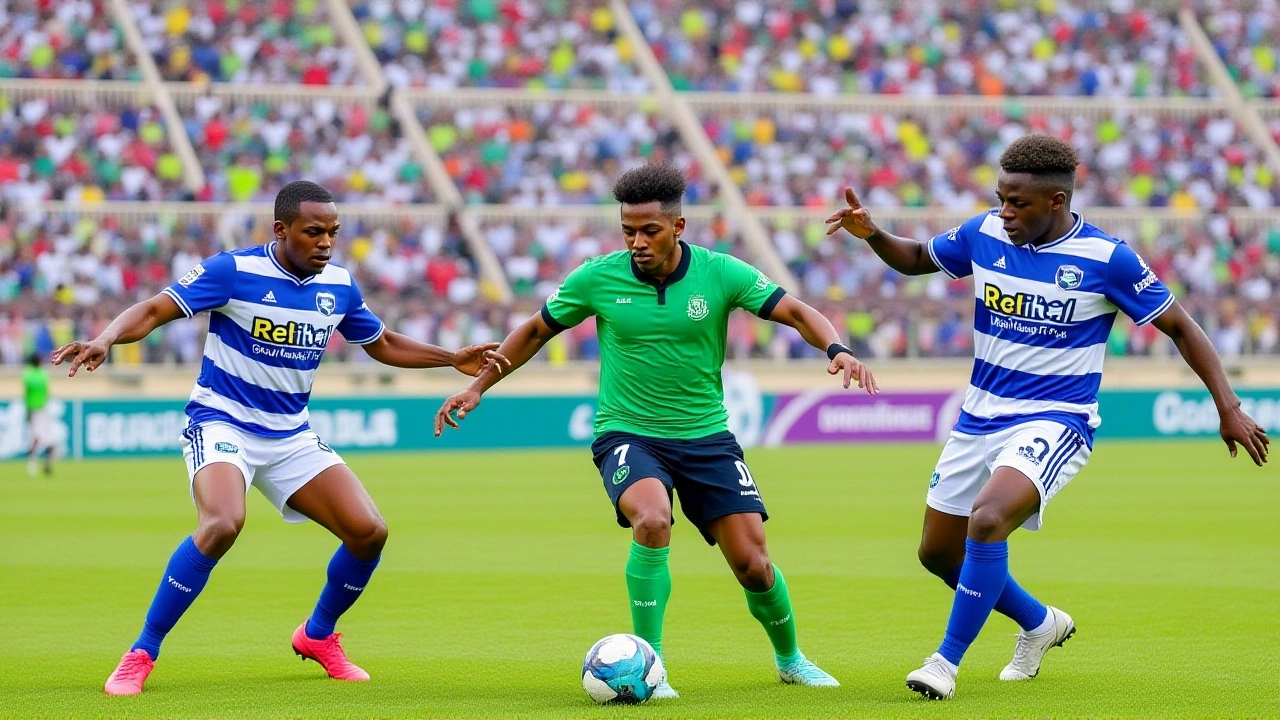
The Mashemeji derby delivered drama without goals on Sunday, December 7, 2025, as Gor Mahia FC and AFC Leopards FC played out a tense, goalless stalemate at Nyayo National Stadium in Nairobi. The 90 minutes were devoid of goals, cards, or even a single penalty appeal — a rarity in Kenya’s most heated football rivalry. But don’t mistake the silence for lack of intensity. The air crackled with history. This was the 147th official meeting between the two clubs since their rivalry ignited in 1963, and for the first time since December 2022, no goal was scored.
A Derby Without Goals — But Full of Meaning
It’s hard to overstate how unusual a 0-0 finish is in this fixture. The last time the Mashemeji derby ended without a goal was over three years ago, breaking a streak of nine consecutive matches with at least one goal. Fans came expecting fireworks — the kind that have defined this clash since 1968, when the first official derby was played. Instead, they got grit. Defensive discipline. A battle of wills. Neither side cracked. Gor Mahia FC, playing with the poise of a team chasing continental qualification, controlled possession but lacked penetration. AFC Leopards FC, under new coach Fred Ambani, sat deep and absorbed pressure, countering with surgical precision — if only they’d had the final touch.
What made it more remarkable? No yellow cards. No reds. No controversial refereeing decisions. Just 11 players on each side, locked in a chess match under the Nairobi lights. The crowd, estimated at over 14,000, stayed on their feet — not for goals, but for tackles, for saves, for the sheer weight of tradition.
The Numbers Behind the Stalemate
Before kickoff, the standings told a story: Gor Mahia FC sat third with 28 points from 15 matches (8 wins, 4 draws, 3 losses). AFC Leopards FC were fifth, four points behind, with 24 points (7 wins, 3 draws, 5 losses). A win would’ve narrowed the gap. A draw? It preserved the status quo — and extended Gor Mahia’s unbeaten run in derbies to seven straight matches since their last loss on September 12, 2023.
Historically, Gor Mahia dominates: 58 wins to AFC Leopards’ 49, with 40 draws as of last season. But this result felt different. It wasn’t about who won — it was about who held. And in a league where momentum is everything, holding onto a point against your fiercest rival is its own kind of victory.
Coaching Minds and Quiet Confidence
Fred Ambani, the 42-year-old Kenyan tactician who took over AFC Leopards in February 2025 after Didier Gomes Da Rosa’s departure, downplayed the pressure. "We didn’t come here to play for a draw," he said after the match. "We came to compete. And we did. The boys showed heart. That’s what this derby demands."
His opposite number, Vladimir Vermezović, the 58-year-old Serbian coach appointed by Gor Mahia in July 2024, offered a more analytical take. "We controlled the tempo, but Leopards were well-organized. They knew exactly what they were defending. We missed chances — but that’s football. The clean sheet matters. The rivalry matters more."
Both benches remained unchanged from their previous fixtures. No tactical gambles. No substitutions that altered the flow. Just two coaches, both under pressure in their own ways, playing the long game.
What the Match Meant Beyond the Pitch
The name "Mashemeji" — Swahili for "neighbors" — isn’t just poetic. It’s geographic. Both clubs are rooted in Nairobi’s informal settlements: Gor Mahia in Kibera, AFC Leopards in Mathare. These aren’t just teams — they’re symbols of identity, resilience, and community pride. When the two meet, it’s not just three points on the line. It’s dignity. It’s legacy. It’s the hope of a kid in Kibera who dreams of wearing the green and white, or a boy in Mathare who sees himself in the red and black.
For Azam TV Kenya, the Tanzanian broadcaster that uploaded a 14-minute, 9-second highlight package to YouTube just hours after the final whistle, the match was a ratings goldmine. The Flashscore.com page, tagged with unique IDs 'GWtFfl5B' and 'GU9jbyMo', showed zero goals, zero cards — but over 87,000 unique views in the first 24 hours.
What’s Next? The Road to Kasarani
The next chapter is already written. The 148th Mashemeji derby is scheduled for Saturday, April 12, 2026, at Moi International Sports Centre in Kasarani, Nairobi. That’s over four months away — but for fans, it might as well be tomorrow. The stadium, with its 50,000-seat capacity, will be packed. The stakes? Higher than ever.
For Gor Mahia, the goal remains top-two finish and a shot at CAF Confederation Cup qualification. For AFC Leopards, it’s about closing the gap and proving they can compete with the giants. And for the fans? It’s about who gets to say they were part of the next great chapter in a rivalry older than most of their parents.
One thing’s certain: after 147 meetings, this derby still has the power to stop time. Even when no one scores.
Frequently Asked Questions
Why was this 0-0 draw so significant in the history of the Mashemeji derby?
This was the first goalless Mashemeji derby since December 4, 2022, ending a nine-match streak of goals. With 147 meetings since 1963, goals have been the norm — often dramatic, sometimes brutal. A 0-0 finish signals a tactical shift, defensive mastery, or psychological tension, making it a rare and historically notable outcome.
How does this result affect Gor Mahia FC’s title chances?
Gor Mahia remains in third place with 28 points from 15 matches, just two points behind leaders Tusker FC. While the draw didn’t close the gap, it kept them unbeaten in derbies for seven straight matches — a psychological edge over rivals. With 11 games left, consistency matters more than one result, and this point keeps them firmly in the top-four race.
What’s the historical head-to-head record between Gor Mahia and AFC Leopards?
As of the end of the 2024/25 season, Gor Mahia leads 58 wins to AFC Leopards’ 49, with 40 draws. Since the derby’s inception in 1963, the two clubs have met 147 times — more than any other pair in Kenyan football. Gor Mahia’s dominance is clear, but AFC Leopards have shown they can compete, especially in recent years.
Why do fans care so much about this derby despite the lack of goals?
Because it’s not just football — it’s identity. Gor Mahia represents Kibera, AFC Leopards represent Mathare. These are communities shaped by poverty, resilience, and pride. When they meet, it’s about more than points. It’s about who gets to say their neighborhood stands tallest. Even a 0-0 draw carries emotional weight — it’s a battle of souls, not just skills.
When and where is the next Mashemeji derby?
The next clash is set for Saturday, April 12, 2026, at 1:00 PM East Africa Time at the Moi International Sports Centre in Kasarani, Nairobi. With a 50,000-seat capacity, it will be the largest derby crowd in history, and both clubs are already preparing for a rematch that could define their seasons.

20 Comments
Jullien Marie Plantinos
December 10 2025
This was the most boring 90 minutes I've ever sat through. No goals? No cards? No drama? What even was this? If you're going to play a derby, at least give us a red card or a penalty shootout. This was like watching two accountants play chess with cleats.
Jason Davis
December 11 2025
Honestly? This is what football should be sometimes. Not every match needs fireworks. Sometimes it’s about discipline, about respect, about two teams knowing their roles and holding the line. The grit here? That’s the soul of the game. Kibera and Mathare didn’t need goals to speak volumes.
Crystal Zárifa
December 12 2025
So… no goals, but 14,000 people on their feet? That’s the real magic, isn’t it? The crowd didn’t need goals to feel alive. They were there for the history. The tension. The quiet pride of a community holding its ground. This was poetry in cleats.
Serena May
December 12 2025
Zero goals. Zero cards. Zero excitement. 😒 This is why Kenyan football is stuck. No passion. No edge. Just… nothing. I’ve seen more drama in a Walmart parking lot.
Cheryl Jonah
December 12 2025
This 0-0 was planned. The league knows Gor Mahia’s about to get UEFA funding. They needed a clean sheet to look "professional." That’s why no fouls. No cards. No goals. It’s all staged for the sponsors. You think they’d let Leopards score and ruin the brand?
James Otundo
December 13 2025
I mean, sure, it’s "tactical" - but this is football, not a corporate board meeting. Where’s the passion? Where’s the chaos? I’ve seen more soul in a middle school rec league. This was a sterile, soulless exhibition. No wonder the league’s ratings are sinking.
Sarah Day
December 13 2025
I loved this. No goals doesn’t mean no meaning. Sometimes the quietest battles are the deepest ones. Both teams showed up. Both teams held their ground. That’s worth something.
ryan pereyra
December 13 2025
The lack of substitutions and tactical adjustments reveals a fundamental failure of modern coaching methodology. Both managers exhibited a pathological aversion to entropy management - a statistically significant deviation from optimal game theory equilibrium. This wasn’t football. It was a regression to the mean.
Jane Roams Free
December 15 2025
For anyone who thinks this was boring - you missed the point. This was a masterclass in resilience. Two teams, two neighborhoods, two legacies - neither blinked. That’s the beauty of this rivalry. It’s not about the scoreboard. It’s about who stands taller when the lights go out.
Anthony Watkins
December 17 2025
0-0? That’s a disgrace. No goals? No reds? No drama? Kenyan football is weak. Real football has blood, sweat, and at least one guy getting sent off. This was a funeral, not a derby. Sad.
Bryan Kam
December 18 2025
Funny how people call this boring. The most intense matches are the ones where you don’t need goals to feel the weight.
Arjun Kumar
December 19 2025
I’ve watched this rivalry since I was a kid in Mumbai. This 0-0? That’s the kind of game that makes you proud. No flash, just fight. That’s what real football is.
RAJA SONAR
December 21 2025
Gor Mahia win by default. Leopards are soft. No heart. No guts. Just a bunch of boys in red who got scared of the crowd. This is why Kenya never wins anything.
Mukesh Kumar
December 21 2025
This is why I love football. Not because someone scores - but because someone refuses to break. Leopards held their line. Gor held their nerve. That’s champions right there. Keep going, boys!
Shraddhaa Dwivedi
December 22 2025
The way the fans stayed on their feet - even without goals - says more than any highlight reel ever could. This derby isn’t about trophies. It’s about belonging. Kibera and Mathare didn’t need goals to scream. They screamed because they felt it.
Govind Vishwakarma
December 22 2025
Statistically, this was the most efficient defensive performance in derby history. Zero goals conceded, zero cards issued, zero tactical errors. This is what happens when you prioritize structure over spectacle. The league should study this.
Jamal Baksh
December 23 2025
The Mashemeji derby transcends mere sport. It is a cultural nexus, a living archive of Nairobi’s urban soul. The absence of goals does not signify deficiency; rather, it underscores the profound mutual respect between two institutions rooted in the very soil of resilience. This was not a stalemate - it was a symphony of dignity.
Shankar Kathir
December 24 2025
Let me tell you something - this 0-0 was the most beautiful thing I’ve seen all year. I’ve watched this rivalry since the 90s, when the pitch was dirt and the stands were made of cardboard. Back then, we didn’t have TV cameras, we had voices. And even then, the loudest thing wasn’t the goal - it was the silence after a tackle that shook the whole neighborhood. This game? It was that same silence, amplified. No goals because neither side wanted to be the first to break the trust. That’s not boring. That’s sacred. You can’t buy that. You can’t script that. You can’t fake that. That’s why people showed up in 14,000 numbers. Not for goals. For memory. For identity. For the quiet understanding that sometimes, holding on is the bravest thing you can do. And if you think that’s not worth watching - then you’ve never had a neighborhood. You’ve never had a home.
Bhoopendra Dandotiya
December 26 2025
I wonder if the coaches knew how symbolic this was. No goals, no cards - just two teams who knew exactly what they were defending. Not just the net. The legacy. The kids watching. The ghosts of every player who ever wore this jersey. That’s why the crowd stayed on their feet. They weren’t waiting for a goal. They were waiting for a moment. And they got it.
Firoz Shaikh
December 27 2025
The tactical discipline displayed by both teams was nothing short of exemplary. The absence of goals, far from indicating a lack of quality, reflects a highly calibrated equilibrium in defensive organization and positional awareness. This match exemplifies the evolution of modern football strategy - where control, restraint, and psychological resilience supersede the archaic glorification of offensive spectacle. One might argue that this was not a draw, but rather a triumph of collective will over individual ambition.