
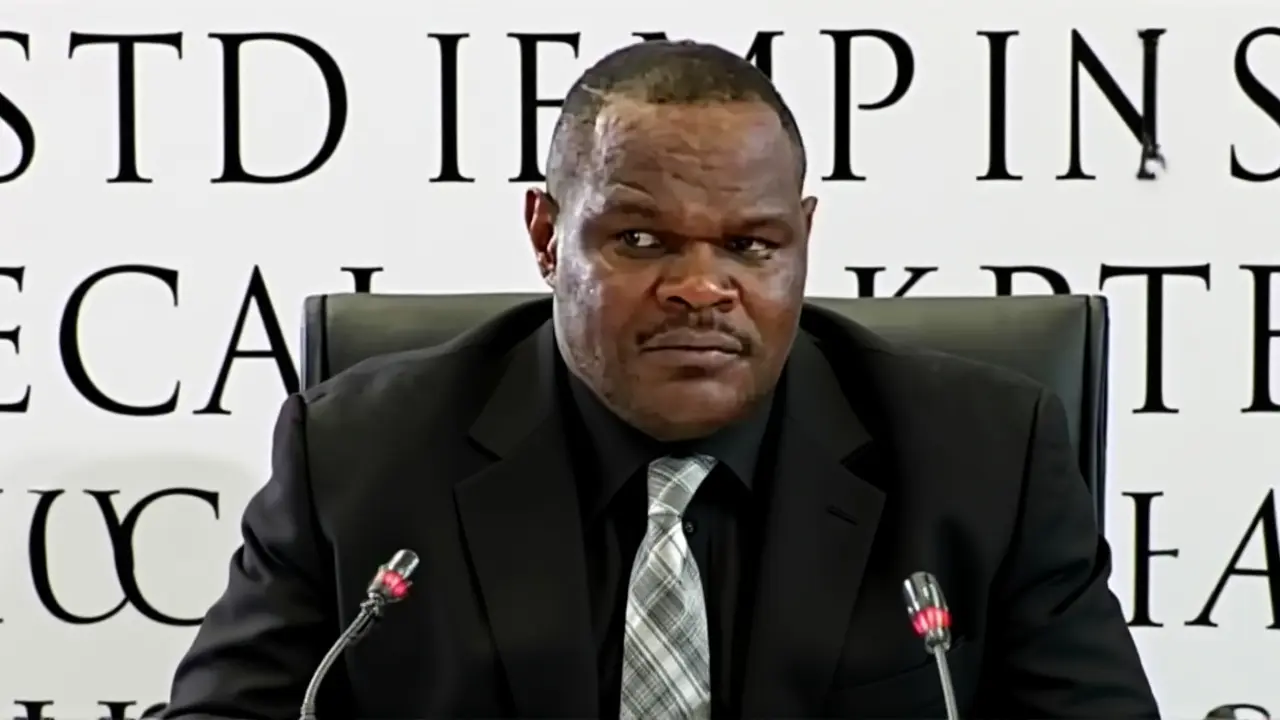
A web of corruption, luxury surgeries, and clandestine arms deals has been stripped bare as the Madlanga Commission of Inquiry Pretoria uncovers a massive infiltration of South Africa's security apparatus. Presided over by Chief Justice Mbuyiseli Madlanga , the commission has revealed that a single "tenderpreneur" managed to embed himself within the highest echelons of the police service. This isn't just about a few bad apples; it's a systemic collapse where criminal kingpins were reportedly guests of honor at generals' family parties.
Here's the thing: the smoking gun isn't a paper trail, but a digital one. Thousands of WhatsApp messages have turned the commission's auditorium into a digital forensic lab, exposing how corruption moved from the shadows into the pockets of the very people paid to stop it. The central figure in this drama is Vusimuzi "Cat" Matalala , a suspected cartel leader and tender tycoon currently behind bars for attempted murder. Matalala didn't just win contracts; he allegedly bought influence, gifting everything from impalas to cosmetic surgery to secure his grip on state funds.
The 'Cat's' Network: From Bribes to Brazilian Butt Lifts
The details emerging from the commission are, frankly, staggering. On February 4, 2025, a digital receipt showed Matalala transferring R1.5-million to Suliman Carrim , a North West businessman and ANC backer. The purpose? To grease the wheels for a R360-million tender from the South African Police Service (SAPS) . According to testimony read by Advocate Adila Hassim on behalf of an anonymous "Witness X," this payment was designed to ensure Matalala's financial interests remained protected through political leverage.
But the relationship went beyond business. The commission heard on February 23, 2026, that General Shadrack Sibiya , the Deputy National Police Commissioner, invited Matalala to his son's engagement party in September 2024. The guest list read like a directory of compromised power: two other generals and Matalala's wife, Tsakane. When grilled about a cryptic text telling Matalala to "make a turn," Sibiya claimed it was merely to help a tipsy wife get home. The commission, however, wasn't buying the "social call" narrative.
Oddly enough, the bribes took a surreal turn. Testimony on February 18, 2026, alleged that Matalala gifted a high-ranking officer, General Hilda Senthumule, a "Brazilian butt lift" surgery performed by a certain "Dr Pert." While Senthumule denied the claim, the sheer specificity of the allegation highlights the transactional nature of these relationships. It turns out that in this world, loyalty isn't bought with patriotism, but with luxury services and high-end livestock.
Tender Manipulation and Political Shadow-Play
The rot doesn't stop at the police headquarters. The commission has branched into municipal corruption, specifically within Tshwane . WhatsApp chats involving Sergeant Fannie Nkosi suggested a systemic "pre-selection" process for municipal contracts. Companies—including one owned by Nkosi's own brother—were allegedly awarded tenders even after failing compliance checks. This wasn't a fluke; the evidence suggests tender manipulation was standard operating procedure across 12 metropolitan departments.
The plot thickened further with the mention of the late former Deputy President David Mabuza . A witness, known as Witness F, was confronted with messages regarding a "close quarter combat" arms deal. While Witness F denied the identity of the person in the chats, the phone contacts were explicitly saved as "comrade DD Mabuza." The suspected arms deal suggests that the infiltration reached far beyond police tenders and into the realm of national security equipment.
Key Facts of the Infiltration
- Financial Scale: Matalala secured SAPS tenders exceeding R300-million.
- Political Link: A R1.5-million payment to Suliman Carrim to facilitate government contracts.
- Criminal Collusion: High-ranking generals attending private events with suspected cartel leaders.
- Institutional Failure: Evidence of pre-selected tender winners in Tshwane municipal offices.
The Ripple Effects and Legal Fallout
This is a nightmare scenario for the South African justice system. When the heads of the Hawks and provincial commissioners are caught in a web of WhatsApp messages with "political fixers" like Brown Mogotsi, the public's trust in law enforcement evaporates. The commission is currently pushing for more transparency, with Chief Justice Madlanga ordering Major General Lesetja Senona to disclose the identities of unnamed accomplices in his communications, despite claims of safety risks.
The broader implication is clear: the state was not just failing to fight the cartel; it was hosting the cartel. The crossover between the Tembisa Hospital R2-billion looting scandal and the SAPS tender fraud suggests a unified "shadow state" where a few key players—the fixers, the tycoons, and the generals—divided the spoils of the taxpayer.
What's Next for the Commission?
The proceedings are far from over. With Witness X's testimony still being expanded in-camera (private) hearings, more names are expected to surface. The focus is now shifting toward the "political fixers" who bridge the gap between the police and the ruling party. If the commission can prove that these payments were systemic and not isolated incidents, we could be looking at a wave of prosecutions that would shake the foundation of the current administration.
The details are still emerging, but the digital trail is hard to erase. As the commission continues to project these private conversations onto the big screens of the auditorium, the facade of "professional distance" between the police and the criminal underworld has finally crumbled.
Frequently Asked Questions
Who is Vusimuzi "Cat" Matalala and why is he central to this?
Matalala is described as a tender tycoon and suspected cartel kingpin. He is the common link between several corrupt officials, having secured over R300-million in SAPS tenders while allegedly paying bribes and providing luxury gifts to generals and politicians to protect his business interests.
What role did General Shadrack Sibiya play in these events?
General Sibiya is accused of maintaining an inappropriately close relationship with Matalala, including inviting him to a private family engagement party. WhatsApp messages suggest he used subordinates like Sergeant Fannie Nkosi as a go-between to facilitate contact with the tenderpreneur.
How was the corruption in Tshwane different from the SAPS corruption?
While the SAPS corruption focused on high-level bribery and infiltration, the Tshwane scandal involved the manipulation of municipal tender processes. This included pre-selecting companies for contracts—even those that failed compliance—and allegedly involving political parties like the EFF and ActionSA to influence the outcomes.
Why is the testimony of "Witness X" being read by an advocate instead of spoken?
Due to extreme safety concerns, the commission decided that Witness X could not appear in person. To protect the witness from potential retaliation by the powerful figures implicated, Advocate Adila Hassim reads their statements into the record, and some hearings are held in-camera.
What was the significance of the "Brazilian butt lift" allegation?
The allegation that Matalala paid for General Hilda Senthumule's cosmetic surgery serves as a specific example of "soft bribery." It demonstrates that corruption wasn't just about cash transfers, but about providing high-value personal luxury services to ensure institutional protection.

16 Comments
Gary Clement
April 8 2026
it's wild how much this looks like state capture on steroids. the use of whatsapp for high level coordination is a classic failure in opsec for these guys
Shelley Brinkley
April 8 2026
prob just a witch hunt lol. these leaks r probably fake or taken out of context like always
nikolai kingsley
April 9 2026
absolute filth. how can a society even function when the police are basically the cartel?? its a total disgrace to the badge and the people who actually try to do their jobs
Josh Raine
April 11 2026
the ethical vacuum here is just staggering. we're talking about a systemic erosion of the social contract where the protectors become the predators. it's not just corruption, it's a psychological collapse of institutional integrity. how does a general even sleep at night knowing they've traded their oath for a BBL or a fancy party? it's honestly nauseating to see this level of greed 🙄
Antony Bachtiar
April 11 2026
wow look at all these people actign shocked. this is basic goverment 101. every where you go it's the same thing just different names and different currencies
Dianna Knight
April 11 2026
this is such a tough situation for the community 😔 but honestly, getting these digital footprints is a huge win for accountability! we need a total pivot in how we handle oversight. keep pushing for the truth! ✨
Mason Interactive
April 13 2026
The 'Brazilian butt lift' part is just surreal. I've seen some weird bribery cases, but that's a new level of specific.
Dr. Sanjay Kumar
April 13 2026
Absolute madness! A total circus! Imagine the audacity of inviting a cartel leader to a family party and then claiming it was just to help a 'tipsy wife' home. The level of delusion is simply breathtaking!
Beth Elwood
April 14 2026
The digital forensic trail here is the real MVP. Without the WhatsApp logs, these guys would have just played the 'he said, she said' game forever. 📱🔍 It's a textbook example of why end-to-end encryption isn't a shield when the device itself gets compromised or leaked. 📉
Aaron X
April 16 2026
This represents a textbook manifestation of institutional isomorphism where the criminal enterprise and the state apparatus merge into a singular, hybrid entity. The teleological end of such a system is inevitably the total dissolution of public trust, as the ontological boundary between law enforcement and law-breaking is completely obliterated through these transactional exchanges.
Angie Khupe
April 18 2026
I really hope this leads to some healing for the country 🌸 it's so sad to see this happen but maybe the truth will bring peace eventually
Mel Alm
April 18 2026
just crazy how the money flows in these circles. its a mess
Arumugam kumarasamy
April 20 2026
It is frankly pathetic that some believe this is an isolated incident. Only a fool would ignore the systemic nature of such failures. While the South African situation is particularly egregious, the incompetence of their oversight is precisely what one would expect from such a disorganized administration. The precision of the WhatsApp leaks is the only redeeming factor in this entire sordid affair.
Suraj Narayan
April 21 2026
Let's get these people behind bars! Time to clean house and start fresh! The truth is out there now and there is no turning back! Let's go!
Robin Godden
April 22 2026
It is my sincere hope that the legal proceedings will be conducted with the utmost integrity and fairness for all parties involved.
Alex Green international
April 22 2026
The evidence presented is quite distressing and the breach of trust is profound