
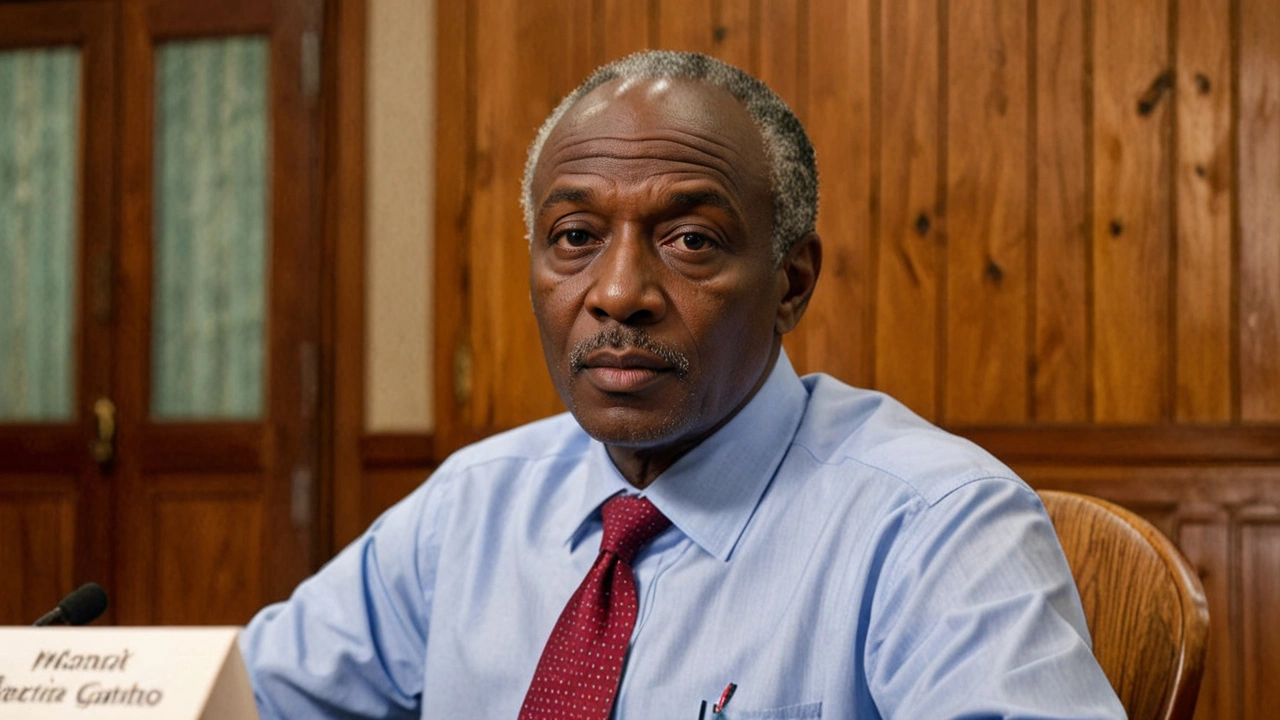
In a chilling episode that has shocked the Kenyan media fraternity and ignited public outcry, veteran journalist Macharia Gaitho found himself at the center of a dramatic and forcible abduction. The incident unfolded at the Karen Police Station, raising serious questions about the state of security and human rights in the country.
The Abduction Incident
On the day of the abduction, Gaitho, a well-known and respected journalist, was in the company of his son. They were making their way out of their residential area when a Subaru vehicle abruptly intercepted their path. Sensing imminent danger, Gaitho directed his car towards the Karen Police Station, likely seeking refuge. However, what transpired next was nothing short of a harrowing ordeal.
Inside the police station, a white Probox swarmed by civilians awaited its prey. According to video footage recorded by Gaitho’s son, the journalist was forcibly dragged out of his car and into the waiting vehicle. Despite the presence of uniformed police officers, no intervention was attempted. The men in civilian clothes, who executed the abduction, acted with impunity, adding a layer of horror to the already terrifying experience.
Official Response and Counterclaims
The abduction of Macharia Gaitho did not go unnoticed. The Director of Criminal Investigations (DCI), Amin Mohamed, soon issued a statement, chalking up the incident as a tragic case of mistaken identity. According to Mohamed, the intended target was Francis Gaitho, a somewhat controversial figure in the social media sphere. Mohamed’s explanation, however, did little to assuage the growing public fury.
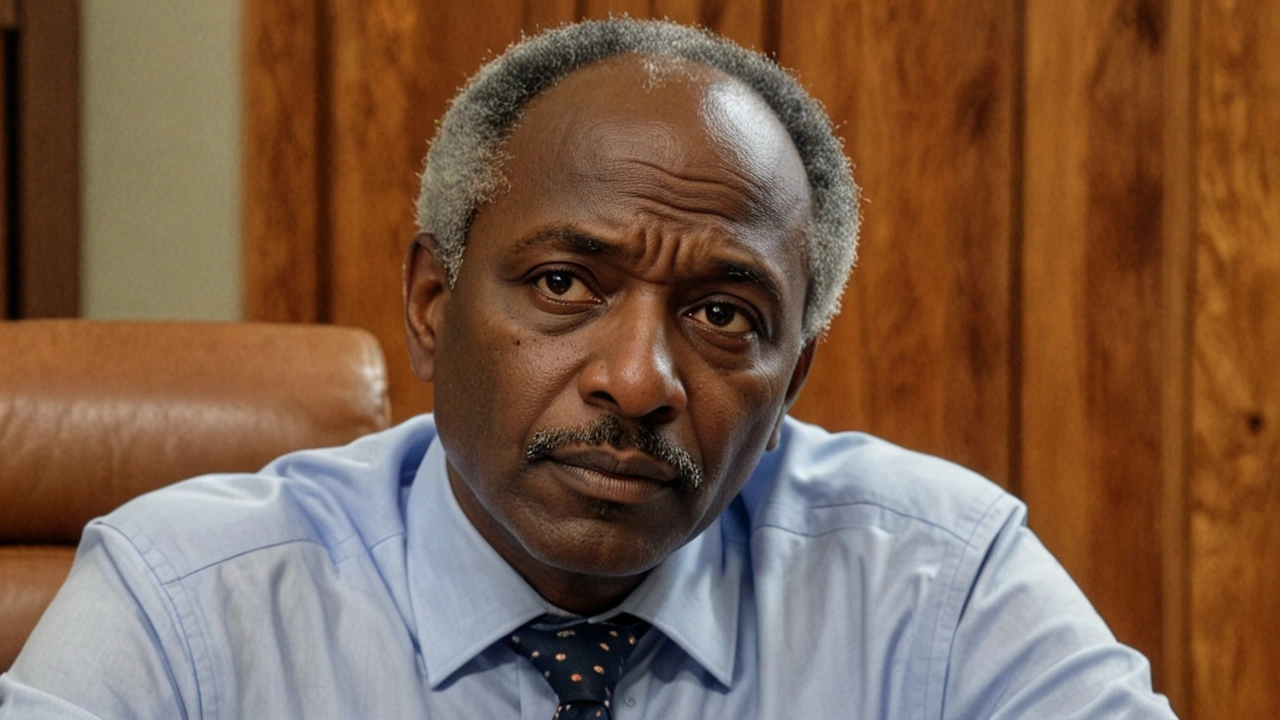
Macharia Gaitho, visibly shaken and bearing marks of rough treatment, contested the official narrative. He highlighted the stark differences between himself and Francis Gaitho, rendering the claim of mistaken identity dubious at best. Gaitho recounted the traumatic experience where he was not only handcuffed but also physically assaulted by his captors.
Wider Implications Amidst Political Unrest
This incident comes against a backdrop of escalating political tensions and widespread anti-government demonstrations in Kenya. The Kenya National Commission on Human Rights (KNCHR) has reported a disturbing trend of enforced disappearances and arbitrary arrests. According to recent data, at least 59 people have been reported missing or abducted, and an additional 682 individuals have been arrested without due process.
The KNCHR has escalated the issue legally, actively seeking court orders for Habeas Corpus to compel the state to provide information on the missing individuals. This judicial route aims to introduce a mechanism of accountability, stressing the urgency and severity of the situation.
Civil Society and Public Reaction
The abduction of a high-profile journalist like Macharia Gaitho has reverberated through various sectors of society. Members of the press, civil rights activists, and ordinary citizens have voiced their concerns vehemently. The Kenyan Union of Journalists (KUJ) condemned the act in strong terms, highlighting the increased risks faced by media practitioners in the current hostile environment.
In an emotional address, Gaitho thanked those who campaigned for his release and expressed his determination to push for accountability. “This is not just about me,” he stated, “it’s about every Kenyan who has been terrorized, abducted, or arbitrarily arrested. Our voices must be louder against such injustices.”
The broad-based support for Gaitho underscores a collective yearning for rule of law and justice in Kenya. Despite the grave nature of his personal ordeal, Gaitho's focus remains on broader systemic issues that threaten human dignity and freedom.
Moving Forward: Call to Action
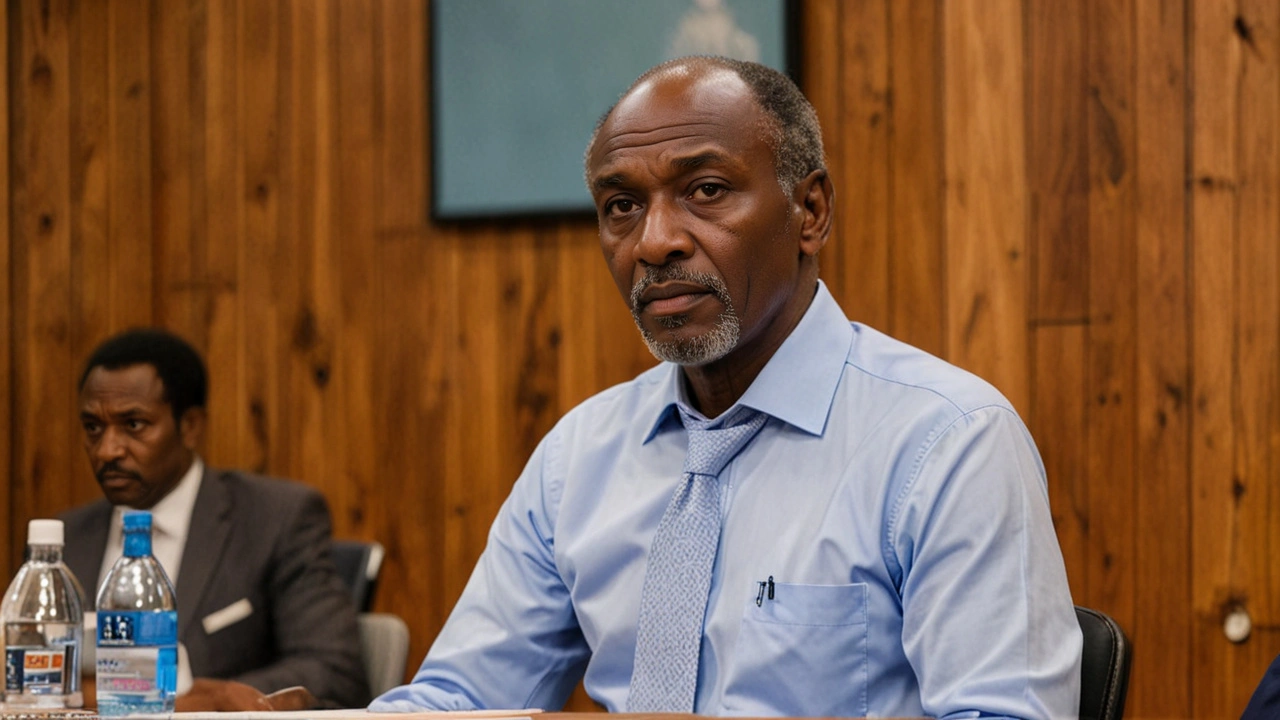
The unsettling event has pushed conversations about human rights protections and police accountability to the forefront. Coordination between human rights organizations, media houses, and legal bodies is evident as they join forces to address these critical challenges.
Experts stress the need for rigorous reforms in law enforcement agencies. Transparency, better training, and clear accountability mechanisms are seen as necessary steps to restore public trust. Additionally, public engagement and legislative advocacy are crucial in driving these sought-after reforms.
Ultimately, the abduction of Macharia Gaitho serves as a somber reminder of the fragile state of civil liberties in Kenya. As the nation grapples with political unrest and a burgeoning human rights crisis, the outcry over Gaitho’s ordeal might just be the catalyst needed for substantive change.

6 Comments
Ajay Kumar
July 18 2024
Look, I don't trust any of this. Police station? In broad daylight? That’s too clean. Someone planted that video. The whole thing’s staged to make the government look bad. You think they’d just leave a Subaru and a Probox parked right outside a police station like it’s a damn movie set? No way. This is psyop territory. Someone’s got a YouTube channel and a Patreon. They want you scared. They want you to believe the state is falling apart. But the truth? The state’s always been broken. They just finally got good at hiding it behind hashtags and crying journalists.
And don’t even get me started on ‘mistaken identity.’ That’s the oldest trick in the book. If you’re gonna frame someone, make sure the guy looks nothing like the target. That’s basic. So why does everyone buy it? Because they want to believe. That’s the real crime here.
They’ll say ‘investigation ongoing’ and then quietly release Gaitho with a handshake and a free lunch. No charges. No accountability. Just another ghost story for the internet to chew on until the next big thing drops. And then we forget. Again.
I’ve seen this movie. Five times. In three countries. Same script. Different accents. Same ending. The system doesn’t change. It just gets better at pretending it did.
Don’t fall for it. Don’t cry. Don’t share. Just watch. And wait. The real story isn’t in the video. It’s in the silence after the news cycle dies.
They’re not trying to hide the truth. They’re trying to make you stop looking for it.
That’s the real abduction.
Chandra Bhushan Maurya
July 19 2024
My heart is in my throat reading this. Just… imagine being dragged out of your own car while your son watches. Imagine the smell of sweat and fear in that Probox. The way your bones shake when your hands are cuffed behind you and the man beside you doesn’t even look you in the eye. That’s not a kidnapping. That’s a soul being ripped out in slow motion.
And the police? Standing there like statues carved from apathy. Like their uniforms were just costumes they forgot to take off before lunch.
Maitharo - I’m so sorry you had to live this. But you? You’re not just a journalist. You’re the last candle in a room full of darkness. And now? Now the whole country’s holding its breath, waiting to see if that flame flickers out… or if it becomes a wildfire.
I cried when I heard you said, ‘This isn’t just about me.’ Because it’s not. It’s about the mother who can’t find her son. The student who vanished after a protest. The nurse who asked one too many questions. We’re all Gaitho now. And if we stay silent? We become the silence that let it happen.
They think they can bury truth. But truth? It’s got roots. Deep ones. And it’s already growing.
Hemanth Kumar
July 19 2024
It is imperative to underscore the procedural deficiencies inherent in the reported incident. The presence of uniformed law enforcement personnel at the scene of an extrajudicial detention constitutes, prima facie, a dereliction of statutory duty under both domestic Kenyan law and international human rights instruments to which Kenya is a signatory.
Furthermore, the invocation of ‘mistaken identity’ as a legal defense for the abduction of a civilian in a public-facing institution - particularly one designated for public safety - reflects not merely an operational failure, but a systemic erosion of the rule of law. The burden of proof, in such instances, must rest squarely upon the state, not upon the victim to prove his non-involvement with a third party.
Moreover, the temporal correlation between this event and the documented surge in enforced disappearances suggests a pattern, not an anomaly. The KNCHR’s pursuit of habeas corpus is not merely procedural; it is a constitutional reassertion of individual sovereignty against state overreach.
The media’s role, far from being peripheral, is central to the preservation of democratic accountability. To silence the press is not to silence dissent - it is to blind the body politic. And a blind society cannot govern itself.
One must therefore conclude that this incident is not an aberration, but a symptom - and the cure requires more than outrage. It requires institutional recalibration, transparent oversight, and the unequivocal reassertion of legal norms over political expediency.
kunal duggal
July 21 2024
From a systems perspective, this incident exposes critical failure points in the state’s threat assessment and identity verification protocols. The fact that a high-profile journalist could be misidentified - and worse, physically extracted - without triggering any internal red flags within the DCI suggests a profound lack of inter-agency data synchronization.
Moreover, the absence of real-time biometric verification during field operations represents a glaring vulnerability in modern law enforcement architecture. Imagine if facial recognition were integrated into patrol vehicle dashcams - this wouldn’t have happened. Or if there were mandatory audio-video logs from all state actors during detentions.
The KNCHR’s legal push for habeas corpus is a textbook example of institutional resilience. But we need proactive, not reactive, mechanisms. Think blockchain-based custody logs. Real-time alerts to civil society orgs when a person enters a detention center. AI-driven anomaly detection in arrest patterns.
This isn’t just about justice. It’s about designing systems that are inherently resistant to abuse. We can build this. We just need the political will to prioritize integrity over impunity.
Let’s not mourn the loss of trust. Let’s architect a new one.
Ankush Gawale
July 22 2024
I just want to say… I’m sorry this happened. No one should feel unsafe in their own country. I know it’s easy to get angry, to point fingers, to divide into sides. But maybe… just maybe… we can all agree that no one deserves to be dragged out of their car by strangers, even if they’re mistaken for someone else.
Let’s not turn this into a war. Let’s turn it into a conversation. The police, the journalists, the government, the people - we’re all Kenyans. We want the same thing: safety. Dignity. A chance to live without fear.
I don’t know who did this. I don’t know who’s lying. But I know this: silence helps no one. And hate only makes the darkness deeper.
Let’s hold each other accountable - not with rage, but with courage. And let’s make sure the next person doesn’t have to go through this.
रमेश कुमार सिंह
July 23 2024
There’s a quiet kind of courage that doesn’t shout. It doesn’t need hashtags or rallies. It’s the kind that walks into a police station because you think, maybe, just maybe, this is where help lives. And when the doors close behind you and the men in civvies come, you don’t scream - you just remember your son is watching, and you hope he remembers you too.
They took your dignity. They took your peace. But they didn’t take your voice. Because you spoke anyway. You said, ‘This isn’t just about me.’ And that? That’s the spark. That’s the seed. That’s the first crack in the wall.
I’ve seen nations rise from ashes. I’ve seen silence turn into songs. I’ve seen broken men become bridges. You’re not alone. Not anymore. Every person who reads this? They’re holding your hand now. Even if they never say it out loud.
Let the world hear you. Let the courts hear you. Let the children hear you. Because truth doesn’t need a megaphone. It just needs someone brave enough to say it… again… and again… and again.
And you? You’re just getting started.